04th Jun 2026 by Adjust
What is AuDHD? Understanding Autism and ADHD in the Workplace
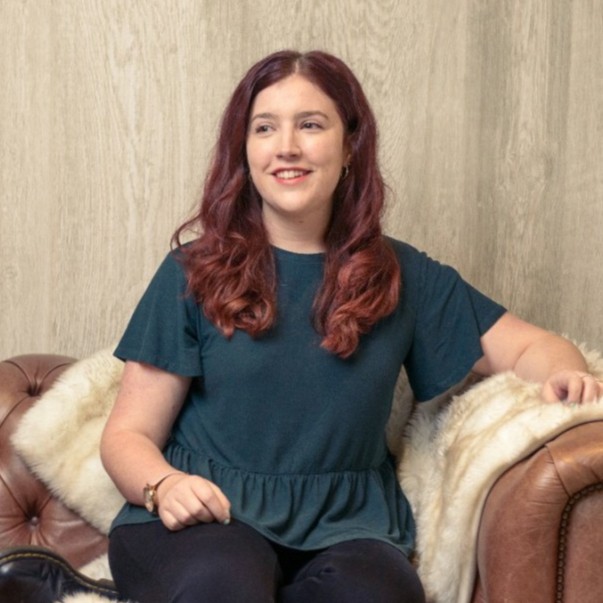
AuDHD means being both autistic and ADHD. The two often go together. Research suggests that between 50% and 70% of autistic people also have ADHD. Yet before 2013 it was not even possible to receive both diagnoses at the same time. In this guest blog, Jemma Gosling, Commercial Analyst at Oodle Car Finance shares her experience.
Welcome to the confusing world of AuDHD, one filled with contradictions which even now make my head spin!
AuDHD is a combination of autism and ADHD, so my brain has a sliding scale of stimulation and emotions, where it’s hard to find a comfortable balance.
I’m very rational but deeply emotional. I crave routine but get bored easily. I hate change yet need novelty. I enjoy repetition but need task-switching to stay engaged. I love socialising but find it exhausting. I’d also prefer if we didn’t have to make eye contact, skip the small talk and start sharing fun facts about octopi.
My brain is full of intrusive and competing thoughts. I feel very intense emotions and fixations, but struggle to process my feelings. I also experience auditory processing disorder, so it can take me a while to understand when someone is talking to me. Sometimes it hits me an hour or so later and I do actually have a good answer, which I usually provide without context. Sorry!
For years my AuDHD was hidden by diagnoses of anxiety and depression, despite my autism in particular being glaringly obvious. But it presents differently in girls, so I spent years just feeling ‘wrong’. My therapists should have just spoken to my husband, because when I told him he replied: ‘Well yeah, I thought we knew that already.’ Well you could have told me!
I describe my autism diagnosis as a roast, because neurospicy traits never seem positive. It’s always like I’m lacking something. I haven’t understood a social cue, I’m too loud or emotional or direct. I spend a lot of time holding myself back or counteracting my real thoughts, actions or feelings to make sure I’m performing correctly or not taking up too much space.
Before researching neurodiversity, I felt like I wasn’t enjoying anything. But I realised it was because I was performing to fit in. I didn’t order what I wanted at restaurants, didn’t take part in hobbies I wanted, or I would take part in activities I hated, just so I didn’t stand out. I decided to ask myself what I actually wanted, what I truly enjoyed, and I slowly found the confidence to be my true self.
I’m slowly learning to like my authentic self, and make room for her! I love how quirky my brain can be. I love finding joy in little things and feeling deep human connections. Autistic joy is a real and powerful thing. And sometimes I even love seeing through what everyone else is doing. It means I question everything and provide different and weird ideas. I just have a different way of looking at things. And who doesn’t love knowing interesting facts about bees?
Although I never stop talking, I love using my voice to advocate for other neurodivergent people. I just hope that if anyone else is struggling, they can read our stories and give themselves a break, because you don’t know what people are going through, and everyone deserves to have space to be themselves.
If you would like to build understanding of neurodiversity including AuDHD in your workplace, Adjust offers neurodiversity training and consultancy to help organisations start the conversation. Get in touch to find out more.
AuDHD refers to people who are both autistic and ADHD.
Research suggests that between 30% and 70% of autistic people are also ADHD, though estimates vary across studies.
Yes. Before 2013 it was not possible to receive both diagnoses at the same time. The DSM-5, published that year, changed that, which means many AuDHD people went without a diagnosis for years, or never received one at all.
Every AuDHD person is different. As Leanne Maskell describes in her book AuDHD: Blooming Differently, the two neurotypes can pull in opposite directions, creating a lifetime of contradictions that can be hard for others to see. AuDHD is not simply the sum of two separate neurotypes. The combination creates something distinct, with its own patterns, strengths and challenges.
AuDHD is significantly underdiagnosed in women. Autism and ADHD both present differently in women and girls, and diagnostic tools were largely built around male presentations. Research shows that ADHD women are diagnosed nearly five years later than men on average, despite symptoms emerging at the same point. Research suggests that perimenopause can intensify both autistic and ADHD traits. For many women, perimenopause is when they first identify as AuDHD or seek a diagnosis.
AuDHD employees bring real strengths to the workplace, including creativity, original thinking, and the ability to spot what others miss. Practical support might include adjustments to sensory environments, flexibility around communication styles, and clear and consistent expectations. Every AuDHD person is different, so the most effective support starts with listening to the individual. Building neurodiversity awareness across your organisation is a strong foundation for getting this right.